Valentine’s Day has a way of making relationships feel like they should be easy.
One day of romance. One moment of connection. One dinner that proves everything is fine.
But real relationships don’t live in February. They live in Tuesday afternoons. In load-shedding evenings. In months where money is tight. In seasons where one partner is exhausted, one is anxious, and both are trying to keep life moving.
And for many couples, the hardest part isn’t a lack of love — it’s a lack of tools.
Not tools to “fix” each other.
Tools to speak without attacking.
To listen without planning a defence.
To argue without damaging.
To repair without humiliation.
To reconnect without pretending.
That’s where structured relationship exercises become powerful. They turn vague tension into clear language. They help couples move from “We’re struggling” to “Here’s what’s happening — and here’s what we can do next.”
This month, instead of focusing on big gestures, it’s worth focusing on something that actually changes relationships: skills you can practice at home.
Why relationship skills matter more than romance
Many couples assume they need more chemistry or more date nights. Often, what they need is more emotional clarity.
When relationships feel tense or distant, it’s usually because of patterns such as:
- misunderstandings that never get cleared up
- recurring conflict that goes in circles
- one partner feeling unheard or dismissed
- stress spilling into tone and behaviour
- emotional withdrawal used as self-protection
- resentment building under “fine” conversations
A relationship doesn’t deteriorate because people stop caring. It deteriorates because people stop feeling safe enough to be honest.
Healthy relationships aren’t relationships without conflict. They’re relationships where conflict is handled with respect, repair and emotional responsibility.
The invisible reason couples get stuck: the “same fight” loop
Most long-term couples don’t fight about ten different things. They fight about the same few themes, just in different outfits.
It might sound like:
- “You don’t listen.”
- “You’re always on your phone.”
- “I’m doing everything alone.”
- “You shut down.”
- “You overreact.”
- “Nothing I do is good enough.”
Underneath those statements are usually deeper needs:
- I want to matter to you.
- I want emotional safety.
- I want teamwork, not criticism.
- I want repair after tension.
- I want to feel chosen, not tolerated.
The moment couples learn to identify the deeper need, the conversation changes. That is exactly what a structured workbook is designed to do — it slows things down enough for understanding to catch up.
Why “talk about it” is not always helpful
People often say, “Just communicate.”
But communication without structure can turn into:
- one person talking, the other defending
- blame disguised as honesty
- tone that escalates the nervous system
- bringing up past pain like evidence
- silence that becomes punishment
- conflict that ends with distance instead of closeness
The goal is not to talk more.
The goal is to talk better.
That means using tools that help couples:
- identify emotions accurately
- state needs clearly
- set boundaries respectfully
- repair after conflict
- reflect without attacking
A healthier Valentine’s month goal: connection that lasts beyond one day
If you want a relationship that feels warmer, calmer and more secure — aim for:
- small daily connection habits
- emotional check-ins instead of assumption
- conflict skills that reduce damage
- appreciation that is spoken out loud
- clear boundaries that protect respect
This is why couples therapy exercises work well even outside therapy rooms. They create a shared language — and relationships thrive on shared language.
The couples therapy tools that work at home (and why they work)
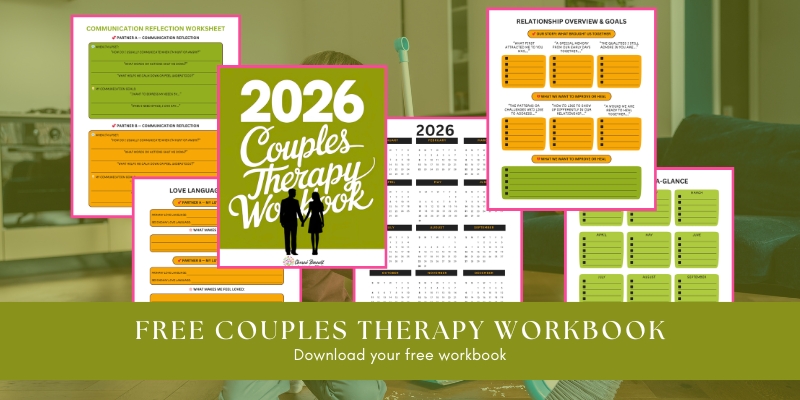
The 2026 Couples Therapy Workbook you uploaded is built around the exact areas most couples struggle with: goals, communication, conflict, emotional connection, boundaries, shared vision and gratitude.
Here’s how to use these kinds of exercises in a realistic, non-cringey way.
1) Relationship Overview & Goals: stop guessing what the other person wants
Couples often assume they share the same goals because they share a home. That’s not always true.
A relationship goals section helps couples put words to:
- what brought them together
- what they admire in each other
- what they want to heal
- what patterns need attention
- how each partner wants to show up differently
This isn’t about digging up the past. It’s about getting aligned again — like adjusting the steering wheel before you blame the road.
How to use it well:
Choose a calm time. Write separately first. Then share. The aim is understanding, not correcting.
2) Love Languages Discovery: improve effort without mind-reading
Many couples are trying — but trying in the wrong direction.
Love language work helps couples identify:
- how they naturally show love
- what makes them feel loved
- what needs more attention
This matters because frustration often comes from mismatched effort:
“I do so much — why isn’t it enough?”
Because it’s not landing in the other person’s emotional “receiver.”
How to use it well:
Pick one small change each for the week. Tiny consistency beats big once-off gestures.
3) Communication Reflection: change tone before you change content
Communication doesn’t break down because couples lack vocabulary. It breaks down because their nervous systems stop feeling safe.
A communication reflection tool helps couples name:
- what shuts them down
- what helps them calm down
- how they communicate when hurt
- how to ask for space without punishment
- communication goals for each partner
This is where the relationship becomes gentler — because couples stop labelling each other and start noticing their patterns.
How to use it well:
Treat it like learning a language: practice when calm, not only during conflict.
4) Conflict Resolution: argue without damage
One of the most helpful relationship shifts is this:
Conflict isn’t the problem. The way conflict is handled is the problem.
A structured conflict worksheet focuses on:
- facts (not blame)
- what was felt
- what was needed
- what triggered the disagreement
- the deeper feeling under anger
This matters because anger is often a bodyguard emotion — it shows up to protect hurt, fear, rejection or disappointment.
How to use it well:
Use it after the conflict has cooled down. It’s a repair tool, not a weapon.
5) Emotional Check-In Tracker: prevent disconnection from becoming normal
Most couples don’t intentionally disconnect. They get busy. They get stressed. They start surviving instead of relating.
An emotional check-in tool helps couples reflect on:
- moments of closeness
- moments of hurt or distance
- appreciation
- needs and support for the week
This is how relationships stay emotionally “updated.” Without check-ins, couples start making assumptions — and assumptions breed resentment.
How to use it well:
Once a week is enough for many couples. Keep it short. Keep it honest. Keep it kind.
6) Boundaries & Needs: stop hoping your partner will “just know”
Boundaries are not threats. They are clarity.
A boundaries worksheet supports couples to define:
- what feels safe
- what feels uncomfortable
- what behaviours cross a line
- how to communicate needs and reaffirm boundaries respectfully
This is especially important in relationships where one partner avoids conflict and the other escalates. Boundaries create stability.
How to use it well:
Boundaries should come with a positive purpose: “I want us to protect respect,” not “I want to control you.”
7) Shared Vision & Future Goals: rebuild teamwork
When couples feel stuck, it often helps to look forward together again.
A shared vision section creates space for:
- shared dreams
- values
- personal and shared goals
- steps to achieve them
It’s difficult to stay connected when you feel like two separate individuals carrying two separate lives.
How to use it well:
Start small: one shared goal for the next month. Momentum matters.
8) Gratitude & Appreciation Journal: the simplest relationship “reset”
Couples often stop appreciating not because they’re ungrateful — but because their brains become trained to notice stress.
Gratitude journaling brings attention back to:
- what is working
- what is still lovable
- what still brings a smile
- what changes when appreciation becomes consistent
This isn’t pretending everything is perfect. It’s refusing to let negativity be the only narrator.
How to use it well:
Make it specific: “I appreciated when you…” not “You’re great.”
Your Free Download: 2026 Couples Therapy Workbook
For Valentine’s Month, Charné Bennett Social Work Services is offering a free, practical resource couples can use at home:
💚 2026 Couples Therapy Workbook
It’s designed around the most important relationship pillars:
- goals and healing focus
- love languages
- communication habits
- conflict repair
- emotional check-ins
- boundaries and needs
- shared vision
- gratitude practices
And if you’re also using the prompts from the earlier resource, you can pair it beautifully as a deeper reflection tool. 2026 couples therapy workbook
When extra support is needed
Some couples can do a lot with a workbook. Others need a professional space, especially when:
- conflict becomes frequent or hostile
- one partner feels emotionally unsafe
- there’s ongoing resentment and withdrawal
- communication repeatedly breaks down
- anxiety, depression or trauma is affecting the relationship
- the couple feels “stuck” in the same cycle
Support is not a sign of failure. It’s a sign that the relationship matters enough to care for properly.
Book with Charné Bennett Social Work Services
If you want guidance beyond self-work, Charné Bennett Social Work Services provides professional psychosocial support to help couples:
- strengthen communication
- build emotional safety
- repair after conflict
- set boundaries
- reconnect with respect and clarity
🌐 Book or learn more: https://cbsws.co.za