Children do not always have the words to explain what they feel.
A child experiencing anxiety may not say “I feel socially overwhelmed.” Instead, they might avoid school activities, withdraw from conversations, or appear irritable and restless. Teachers may notice a learner who hesitates to speak in class. Parents might observe a child who becomes quiet in unfamiliar environments or distressed before social events.
Anxiety in children and teenagers often hides beneath behaviour that looks unrelated to emotional distress. For some young people, drawing, colouring, or creative expression becomes the safest way to communicate what they cannot yet explain.
This is why art therapy has become an increasingly recognised approach in supporting children and adolescents experiencing social anxiety and emotional distress. Creative activities allow young people to explore their thoughts and emotions without the pressure of verbal explanation. For many children, a pencil, paintbrush or colouring page becomes a bridge between internal feelings and external understanding.
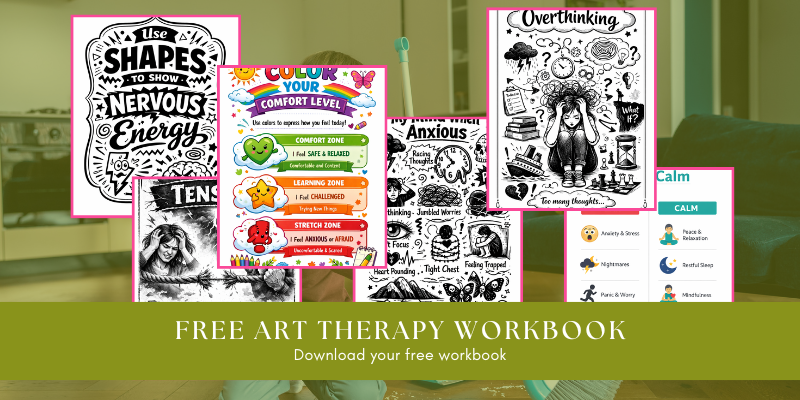
During this month, Charné Bennett Social Work Services is sharing a free Art Therapy Workbook designed to support emotional expression and anxiety regulation through structured creative exercises.
Understanding Social Anxiety in Children and Teenagers
Social anxiety is more than shyness. It is a persistent fear of being judged, embarrassed, or rejected in social situations. While adults may recognise and articulate these fears, children often struggle to identify or communicate them clearly.
Common signs of social anxiety in young people include:
- Avoiding school participation or presentations
- Fear of speaking in groups
- Excessive worry about making mistakes
- Difficulty initiating friendships
- Physical symptoms such as stomach aches before social events
- Withdrawal from activities they once enjoyed
Research indicates that anxiety disorders are among the most common mental health challenges experienced by young people worldwide. Studies published by the World Health Organization suggest that approximately one in seven adolescents experience a mental health condition, with anxiety disorders being among the most prevalent.
In South Africa, educational and social pressures can intensify these experiences. Academic expectations, peer relationships, digital exposure, and family stressors all contribute to emotional strain among young people.
Early support is crucial because untreated anxiety can affect:
- academic engagement
- self-esteem and confidence
- social development
- long-term emotional resilience
When children learn safe ways to process their emotions early, they develop skills that support mental wellbeing into adulthood.
Why Art Therapy Works for Children
Children naturally express themselves through creativity.
Before children fully develop emotional vocabulary, they often communicate through drawings, colours, shapes and imaginative storytelling. Art therapy uses this natural tendency to help young people explore feelings safely.
Unlike traditional conversation-based support, creative therapy does not require children to explain themselves immediately. Instead, it allows them to:
- externalise emotions
- explore difficult experiences safely
- process feelings gradually
- develop emotional awareness
- build confidence through expression
Art therapy does not focus on artistic talent. The goal is not to produce something visually impressive but to create a space where emotions can exist outside the child’s mind.
When a child draws how they feel, the emotion becomes something they can observe rather than something overwhelming inside them.
The Science Behind Creative Expression and Anxiety
Research in psychology and neuroscience increasingly supports the benefits of creative activities in reducing stress and improving emotional regulation.
Engaging in artistic activities has been shown to:
- reduce cortisol levels, the hormone associated with stress
- activate areas of the brain linked to emotional processing
- support mindfulness and relaxation
- improve mood and self-awareness
Creative activities can also help regulate the nervous system. When children engage in repetitive or focused creative tasks such as colouring patterns, their breathing slows, their bodies relax, and their attention shifts away from anxious thoughts.
This process mirrors techniques used in mindfulness and grounding exercises.
For children experiencing social anxiety, creative expression provides a low-pressure environment to explore emotions without fear of judgement.
Why Creative Exercises Are Especially Helpful for Social Anxiety
Children with social anxiety often fear being evaluated or criticised. This fear can make traditional conversations about feelings uncomfortable or overwhelming.
Art therapy changes the focus.
Instead of asking a child to explain their emotions directly, creative exercises invite them to explore feelings through images, colours and symbols.
This approach helps children:
- express feelings without needing the “right words”
- explore emotions privately before sharing them
- build confidence in communicating thoughts
- understand their emotional responses
- develop coping strategies in a non-threatening environment
Art becomes the conversation starter.
A drawing may open the door to questions like:
“What was happening in your mind when you chose these colours?”
“How does this picture show how you felt today?”
“What would help the character in your drawing feel calmer?”
These gentle discussions allow emotional insight to develop gradually.
Helping Children Understand Their Feelings
Emotional awareness is a skill that develops over time.
Many children experience intense emotions without understanding what those feelings mean. When emotions are confusing, they can become overwhelming.
Creative exercises help children learn to:
- identify emotions
- recognise triggers
- describe experiences visually
- understand how emotions change over time
For example, a child might colour shapes representing worry, excitement, anger or sadness. Over time, these exercises help them recognise emotional patterns.
Understanding feelings is the first step toward managing them.
Building Confidence Through Expression
Children experiencing social anxiety often feel unsure about themselves. They may worry about saying the wrong thing, making mistakes, or being judged by others.
Creative activities help rebuild confidence by giving children a space where there are no wrong answers.
A drawing cannot be incorrect. A colour choice cannot be judged. A creative exercise allows children to experiment freely without social pressure.
This freedom supports:
- self-expression
- confidence building
- emotional safety
- personal identity development
When children feel safe expressing themselves creatively, they gradually become more comfortable expressing thoughts and feelings verbally as well.
Creating a Safe Emotional Space at Home
Parents and caregivers play a powerful role in supporting children’s emotional wellbeing.
While professional support can be important, small daily practices at home also help children feel safe expressing emotions.
Some helpful practices include:
Creating a quiet creative space
Allow children time to draw, colour or journal without interruption.
Avoiding criticism of creative work
Focus on the child’s experience rather than the result.
Asking open-ended questions
Instead of asking “What is this drawing?”, try asking “How were you feeling when you drew this?”
Encouraging emotional language
Help children connect emotions with experiences.
Normalising feelings
Let children know that anxiety, frustration and sadness are normal human experiences.
These small steps build emotional trust and resilience.
Using Art Therapy Exercises as Emotional Tools
Structured creative exercises can help children explore specific themes such as:
- understanding emotions
- identifying worries
- recognising personal strengths
- visualising calm spaces
- expressing difficult experiences
- building positive self-image
These activities can be used:
- during quiet reflection time
- after stressful school days
- as part of bedtime wind-down routines
- during therapy sessions
Creative exercises provide a gentle pathway into conversations that might otherwise feel difficult.
Free Download: Art Therapy Workbook for Social Anxiety
To support children and adolescents in exploring their emotions creatively, Charné Bennett Social Work Services is offering a free Art Therapy Workbook designed to help young people:
- express difficult feelings through creative exercises
- explore anxiety in a safe and structured way
- build confidence and emotional awareness
- develop calming strategies through art
The workbook contains a collection of creative worksheets designed to support emotional exploration and stress reduction through guided artistic activities.
These exercises can be used by parents, caregivers, teachers, or therapists to support children experiencing anxiety or emotional stress.
Creative activities often open conversations that children struggle to start on their own.
When Professional Support May Be Helpful
While creative exercises can provide meaningful support, some children may benefit from additional guidance from a mental health professional.
Consider seeking professional support if a child experiences:
- persistent anxiety affecting daily life
- school refusal or avoidance
- withdrawal from friendships or activities
- ongoing sadness or irritability
- difficulty managing emotions
Early intervention can help children develop healthy coping strategies and emotional resilience.
Professional psychosocial support provides children with a safe environment to explore their feelings while learning practical emotional regulation skills.
Supporting Children’s Emotional Wellbeing
Childhood and adolescence are periods of rapid emotional development. During these years, children are learning how to understand themselves, manage stress, and navigate social relationships.
Creative expression is one of the most natural and effective tools for supporting this process.
Art allows children to slow down, explore their inner world, and express emotions in ways that feel safe and manageable.
When adults create supportive spaces for this expression, children develop not only emotional awareness but also resilience, confidence, and the ability to cope with life’s challenges.
Support from Charné Bennett Social Work Services
Charné Bennett Social Work Services provides professional psychosocial support for children, adolescents, and families facing emotional or behavioural challenges.
Services include support for:
- anxiety and emotional distress
- child behavioural challenges
- family support and guidance
- emotional development
- psychosocial interventions
For more information or to book a consultation, visit: